
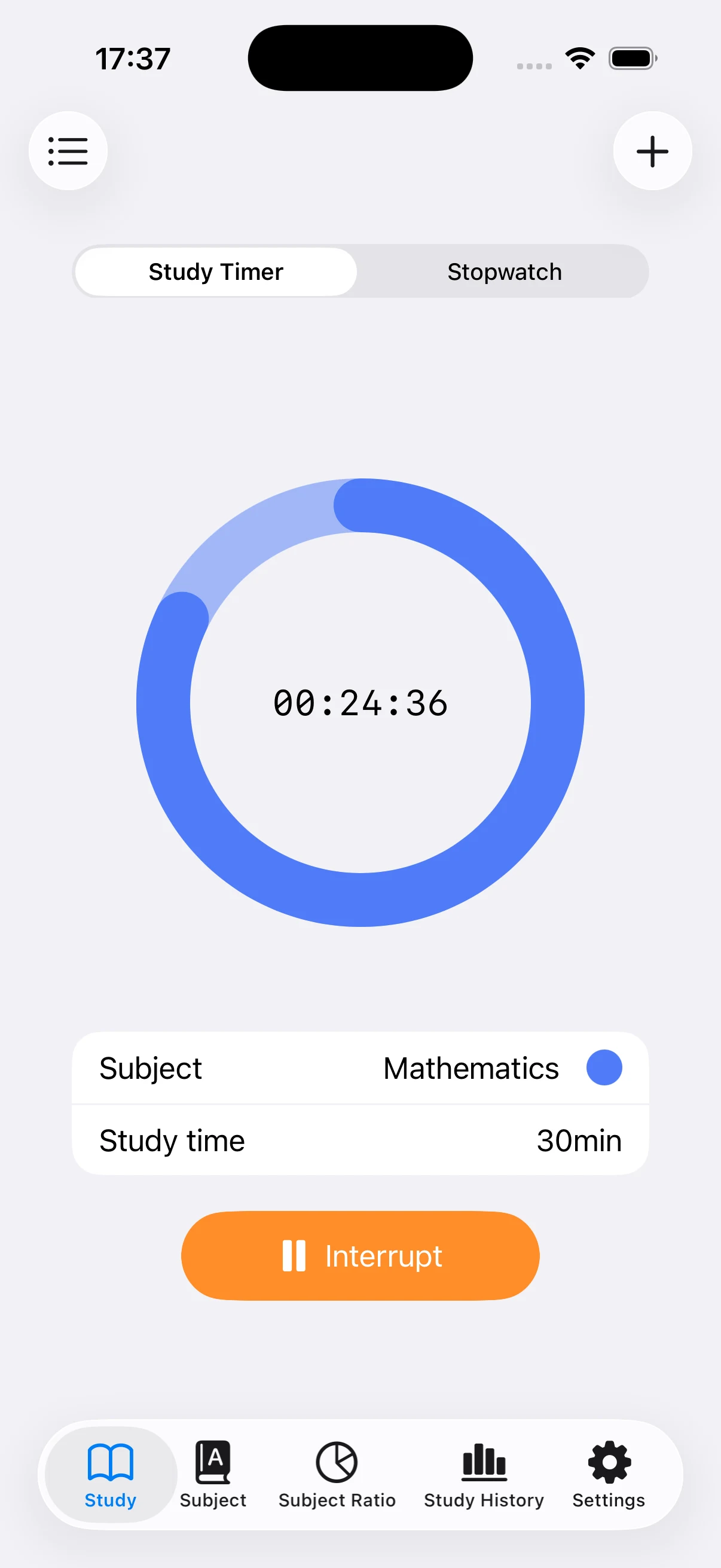
Start with a few subjects and a short block
A detailed system can become work of its own. Begin with three to five major subjects and a duration you can repeat most days, then add detail only when it helps a decision.
Make starting the timer your study cue
Use the same small sequence: sit down, choose the subject, and press Start. The action can serve as a consistent transition into study instead of waiting until you feel fully motivated.
Review one or two weeks, not one day
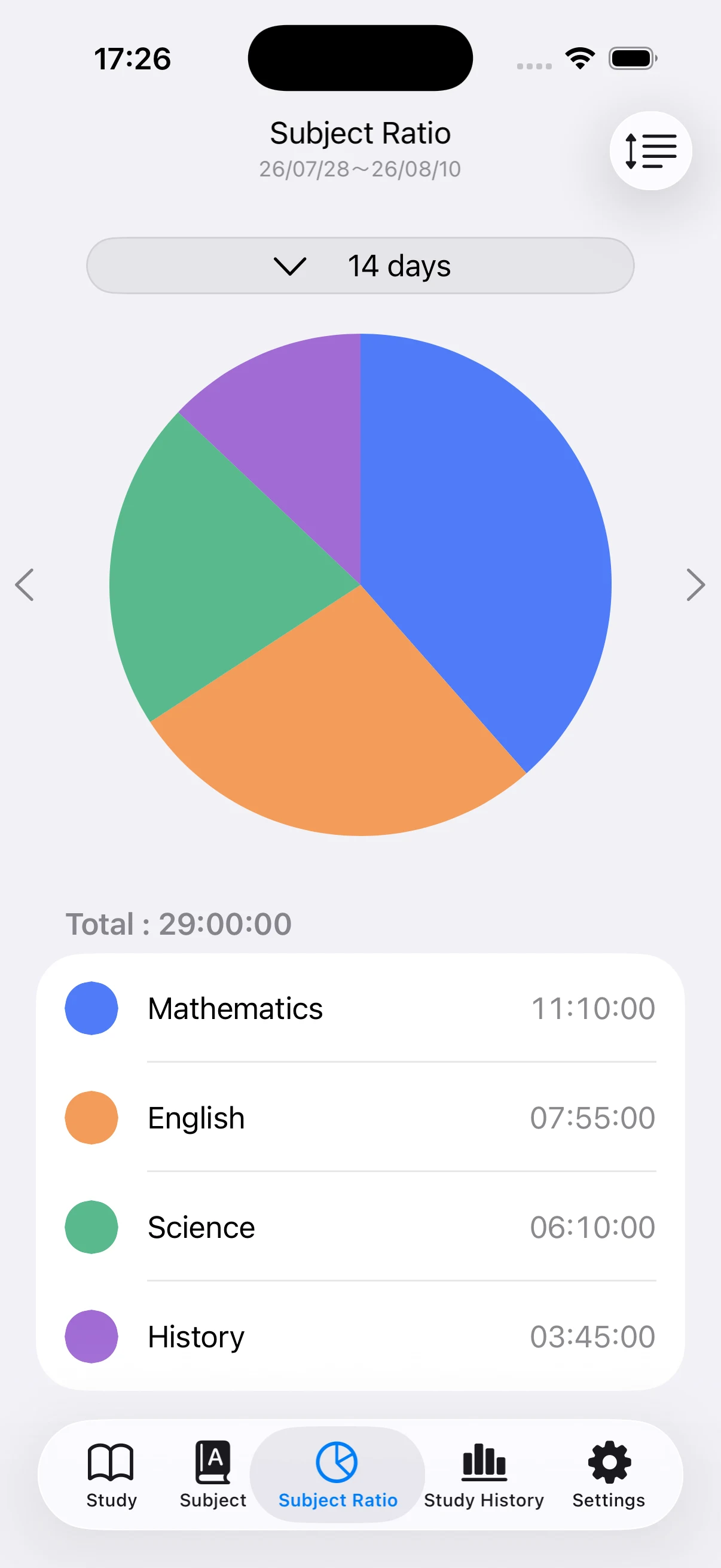
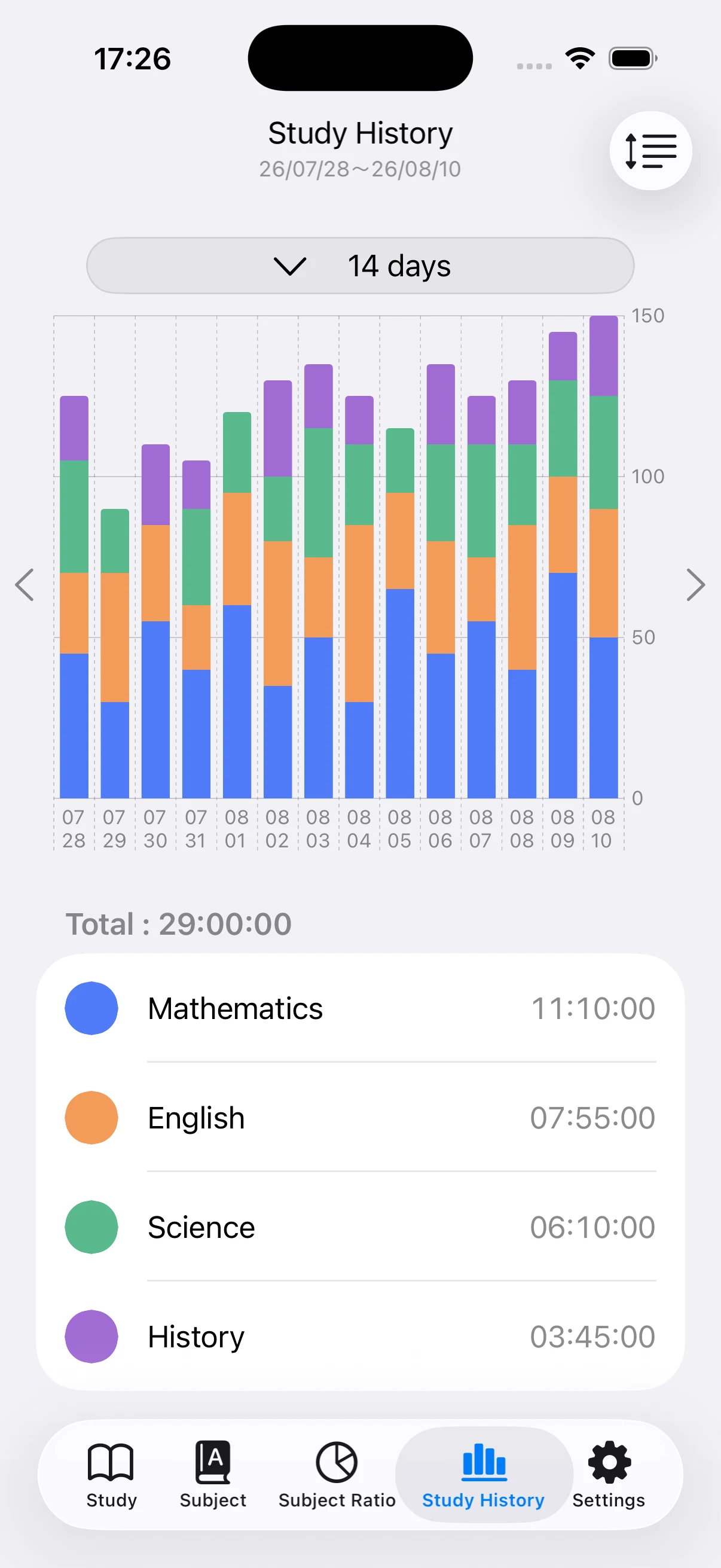
Daily time changes with schedules and energy. Review the pie and bar charts over one or two weeks to see study days, total effort, and subject balance together.
Turn an imbalance into the next session
When a priority subject is short on time, decide the next subject and duration immediately. A concrete next block is more useful than only noticing the imbalance.
Resume after a missed day
Missing a record does not erase earlier progress. Add what you can manually and continue timing the next session rather than abandoning the tracking system.